
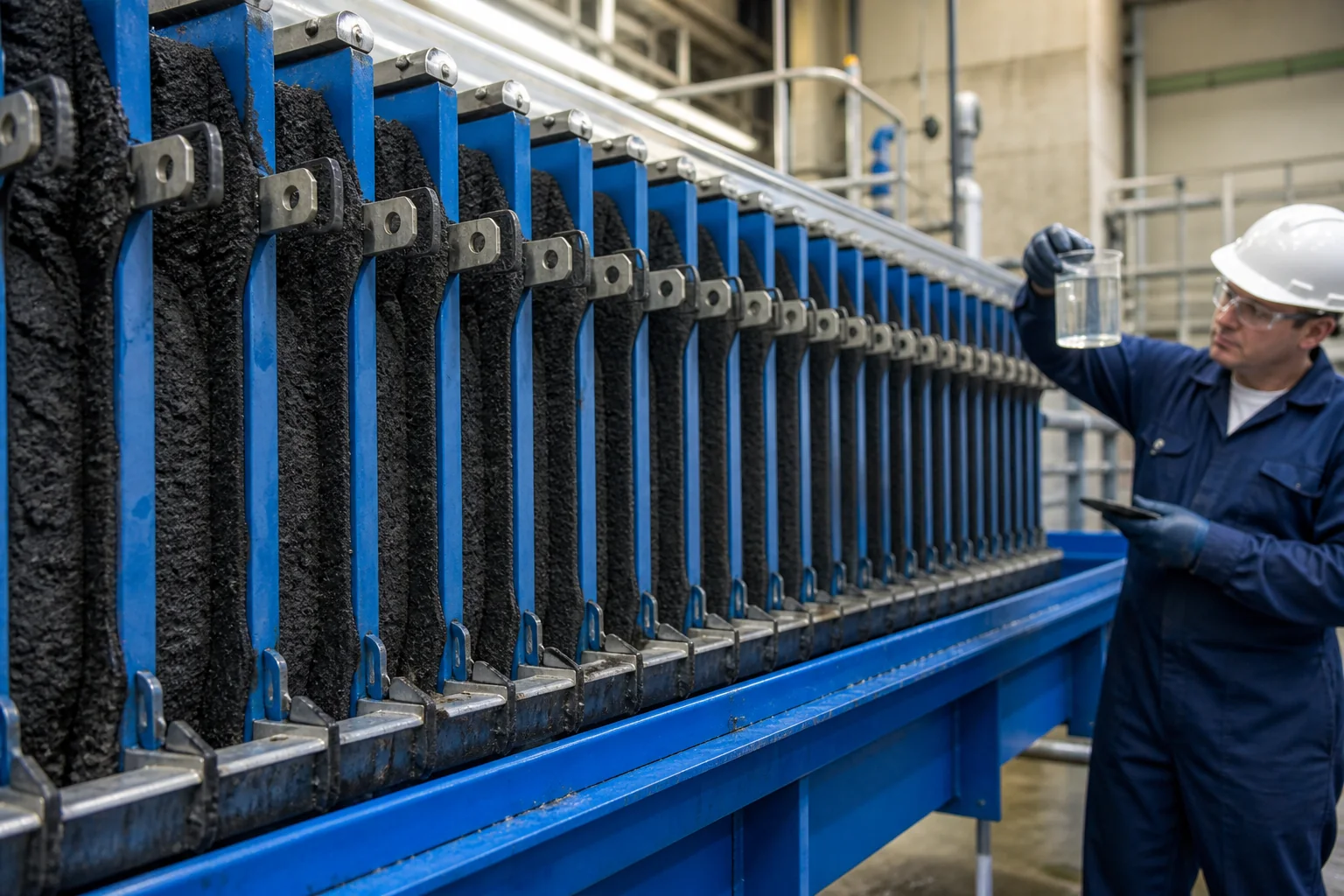
Filter-press conditioning must support a complete cycle: pumpable feed, even chamber filling, clear filtrate, useful pressure development, dry enough cake and reliable release. Polymer selection should therefore follow the pressure and time record, not only a jar observation.
Define the sludge and cycle
Record sludge source, solids, viscosity, temperature, pH, salts, conditioning chemicals, feed-pump curve, plate type, filtration area and target pressure. Capture filtrate volume and quality over time rather than only at the end.
Inspect cloth and plate condition before comparing polymers. Blinding, leakage or uneven filling can dominate the result.
Test conditioning without losing pumpability
Compare active dose and grade using a filtration test that can show initial drainage, resistance, cake formation and release. Large floc may help early capture but can create compressible cake or poor chamber filling. Excess polymer may increase viscosity and water retention.
Keep preparation and shear consistent. A stock solution damaged in transfer may perform differently from a fresh laboratory solution.
Approve the whole cycle
Rank filtrate quality, cycle time, throughput, cake solids, discharge, cloth cleaning and polymer use. Repeat the finalist on a second representative feed. Scale up with fixed press settings before adjusting pressure or fill strategy.
Send the plate configuration, feed solids, current cycle and target with the sample request worksheet.