
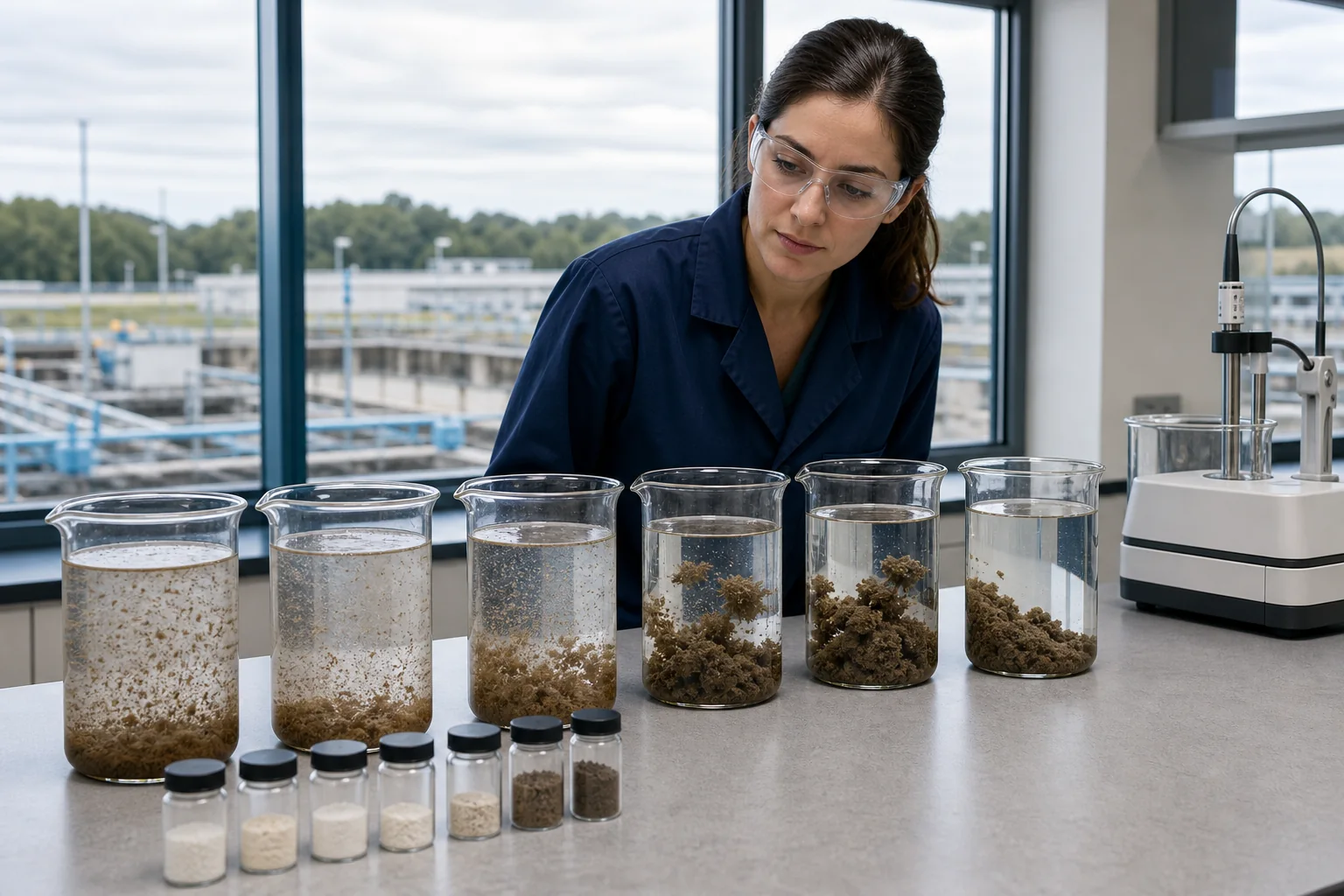
Food-processing DAF sludge is the recovered feed to a dewatering step, not the same purchasing duty as chemical addition to the flotation unit. Cationic polyelectrolyte must be qualified for the collected solids and the downstream separator.
Identify the stream being purchased for
Separate flotation treatment from conditioning recovered float sludge. Record the plant process, collection method, sludge concentration, storage and cleaning-cycle influences. Keep upstream coagulant and polymer additions attached to the sample, because the recovered solids already carry part of that treatment history.
Test representative production cases
Compare normal processing and a relevant difficult case without combining unrelated samples into an artificial average. Record temperature, pH, visible fats and feed condition where relevant. The coagulant-versus-flocculant distinction helps define the candidate role rather than ordering two different product functions as substitutes.
Evaluate the entire dewatering result
Measure drainage, liquid solids, cake condition, throughput and release under the intended equipment route. A visually cohesive fatty floc may not translate into practical drainage or cake handling. Check stock distribution and dose before assuming poor performance requires higher charge. Use paired trials to distinguish chemical and feed changes.
Avoid unsupported downstream claims
Qualification for dewatering does not authorize a claim about food contact, recovered-product use or disposal compliance. Confirm the SDS, waste route and relevant plant requirements separately. Keep commercial approval specific to the tested sludge and separator; any changed product-recovery use needs its own review.
Keep the purchase tied to evidence
Record the candidate code, sample lot, sludge condition and measurement method beside each result. An untested condition is a qualification limit, not an assumed pass. Keep unresolved requirements visible before approving repeat supply.
| Requirement | Evidence | Purchasing decision |
|---|---|---|
| Duty | Recovered float versus DAF dosing | Product function is clear |
| Variation | Processing and cleaning context | Samples represent the purchase |
| Endpoint | Dewatering and handling record | Approval is not merely visual |
Request a defined sample and quotation
Send the recovered-sludge route, upstream chemicals, production variation, storage, separator and acceptance criteria. State whether the request concerns dewatering only or a separately regulated downstream use.
Include quantity, delivery destination and requested documents with the sample brief. The quality and supply record connects the qualified product to shipment. Gongyi Xinqi Polymer Co., Ltd. can review the operating case and commercial request; confirm grade-specific availability and terms before ordering.
Request a product and purchasing review
Send the sludge, equipment and supply requirement for the intended duty.